
Hidden Costs of Cheap Printers for Businesses
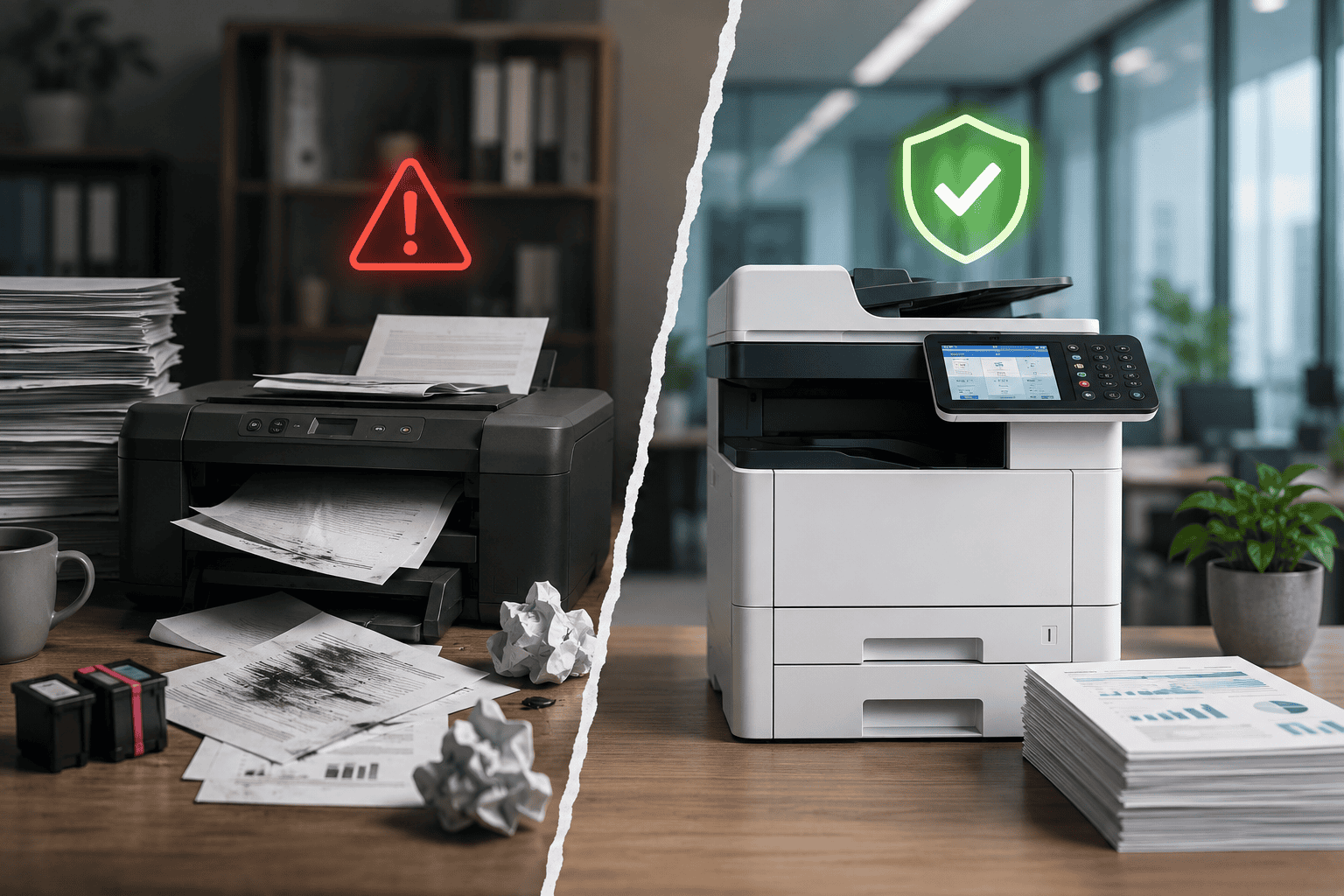
Why Cheap Printers May End Up Costing Businesses More
Buying a cheaper printer may seem like the more sensible option for a lot of South African businesses, especially smaller companies trying to reduce operational expenses and avoid spending substantial amounts on office equipment.
The issue, however, is that the cost of a printer is not always limited to the amount paid for it initially.
When businesses start comparing cheap printers vs business printers South Africa, a lot of the focus may immediately go towards the upfront cost while overlooking some of the expenses that may develop over time.
Ink usage, maintenance requirements, downtime and even the effect that faulty equipment may have on employee productivity all contribute towards the total cost involved.
A business may save a few thousand rand initially, but frequent repairs and recurring expenses may eventually result in the opposite outcome.
The Purchase Price Trap
A lot of businesses are drawn to cheaper printers because the lower price tag immediately looks like the more sensible choice. However, in many cases, the purchase price is only one part of the total cost as manufacturers compensate through higher consumable costs and devices that are not built for prolonged use.
This creates a situation where businesses repeatedly spend money on:
- Replacement cartridges
- Frequent servicing
- Paper jams and repairs
- Printer replacements
- Employee downtime
Business-grade printers, on the other hand, are used where there is a constant need for printing and where large workloads are expected.
The upfront cost is higher and may put some buyers off initially, but over time the cost of operating these printers is usually lower than what many expect.
Ink and Toner Costs Add Up Quickly
One of the biggest hidden expenses is consumables.
Cheap desktop printers typically use:
- Smaller cartridges
- Lower page yields
- More frequent replacement cycles
- Expensive proprietary ink systems
A lower-priced printer can seem like a good deal in the beginning, and for a lot of businesses the upfront price is usually one of the first things being considered. The problem is that the printer itself is not always where most of the money ends up being spent.
If the printer costs R2,000 but cartridge replacements amount to R1,500 every month, the yearly expense can become a lot larger than expected.
Enterprise printers offer:
- High-yield toner systems
- Lower cost per page
- Better print efficiency
- Bulk consumable compatibility
Over several years, the savings can be dramatic.
Downtime Costs More Than Most Businesses Realise
When a printer stops working, productivity stops too.
Cheap printers are often not built for continuous office workloads. As print volumes increase, businesses experience:
- Slow printing speeds
- Overheating
- Connectivity failures
- Paper feed problems
- Network instability
Printer issues are not only frustrating, but they can also create hidden labour costs that are easy to overlook. A lot of employees end up spending valuable time trying to troubleshoot printing problems instead of spending that time on tasks that contribute towards business growth.
In larger or busier offices, even 15 to 20 minutes of printer disruptions each day can quickly turn into several lost working hours over the course of a month.
Business printers are specifically designed for:
- Heavy daily print volumes
- Multi-user environments
- Stable network integration
- Faster output speeds
- Higher duty cycles
This reliability directly improves workplace efficiency.
We provide copier rentals and shredding services to support your business needs.
Maintenance and Repair Expenses Escalate
Many businesses underestimate printer maintenance costs.
Consumer-grade printers often require:
- Frequent servicing
- Replacement rollers
- Printhead cleaning
- Shorter hardware lifespans
In many cases, repair costs eventually exceed the original purchase price.
Business-grade printers usually include:
- Longer service intervals
- Modular replacement parts
- Manufacturer support agreements
- On-site maintenance options
All of this helps businesses avoid disruptions that can slow work down, while also making costs easier to anticipate.
Monthly Operating Costs and Energy Efficiency
Electricity prices in South Africa are not what they were a few years ago and with costs continuing to increase, energy efficiency has become more important than it previously was.
Cheap printers are not always optimised for energy-saving performance. Older or lower-end models may:
- Consume more standby power
- Heat inefficiently
- Require longer warm-up cycles
Enterprise devices often include:
- Energy-saving sleep modes
- Faster wake times
- Efficient toner fusion technology
- Lower overall power consumption
For businesses operating multiple devices, these savings accumulate over time.
Productivity Loss Is the Biggest Hidden Cost
The largest expense is often invisible.
When employees constantly:
- Wait for slow printers
- Reprint failed jobs
- Fix paper jams
- Restart devices
- Replace cartridges
There is also the issue of productivity. Staff are there to get through work, but printer issues can easily take up part of the day when people must stop what they are doing to troubleshoot problems.
For home use, a cheaper printer can sometimes do the job perfectly well if it is only being used occasionally. Offices are different though, because the demands are much higher and printers are expected to handle constant use throughout the day.
Business printers improve:
- Workflow efficiency
- Document turnaround times
- Staff productivity
- Department collaboration
Although the upfront cost is higher, many businesses find that the long-term operational benefits make it worthwhile.
The Risks That Consumer Printers Can Pose to Security
Modern businesses also need to consider data security.
Many low-cost printers lack advanced security features such as:
- User authentication
- Secure print release
- Network encryption
- Audit tracking
This becomes more important when companies are printing confidential documents such as contracts, employee information, financial statements, or client records, especially considering that these documents contain sensitive information that should not be accessible to everyone.
Business printers have stronger security protocols in place which help companies protect this information and reduce the chances of data being exposed.
The Purchase Price Is Only Part of the Picture
Many businesses look beyond the upfront cost and use Total Cost of Ownership (TCO) to understand what the printer will cost over time.
TCO includes:
- Consumables
- Repairs
- Electricity usage
- Downtime
- Employee productivity
- Device lifespan
Paying more for a printer in the beginning does not always mean spending more over time, especially over a period of five years where operating costs start becoming more noticeable.
This is why a lot of South African businesses eventually shift from entry-level printers to managed or enterprise printing solutions.
How Businesses End Up Choosing Different Printers
There is no single printer that suits every business environment as printing requirements can vary quite significantly depending on factors such as:
- Monthly print volumes
- Number of employees
- Colour vs monochrome requirements
- Document security needs
- Workflow demands
Some businesses only print documents occasionally, so a standard printer is enough to get through daily tasks. Businesses that print regularly usually place more importance on features such as:
- Lower long-term costs
- Greater reliability
- Better efficiency
- Reduced operational stress
Final Thoughts
Cheap printers vs business printers South Africa is a discussion that usually starts with price because that is the first thing businesses notice.
A cheaper printer can look like the easier choice in the beginning, particularly when there are already expenses pulling from different directions. Saving money upfront makes sense, but printing requirements do not always remain the same over time.
As workloads start increasing, things such as toner usage, servicing and interruptions start becoming part of the bigger picture.
Business printers are intended for larger workloads and repeated use, which is why the lower purchase price is not always the saving that it first appears to be.
For more information on South African business regulations and workplace compliance, visit gov.za and saflii.org.za.